New York, NY 10003
Somatic Collaborative is a New York-based practice working at the intersection of architecture, landscape, and urbanism. We move fluidly across scales, from the renovation of historic structures, to the design of buildings, to the strategic transformation of urban districts and metropolitan territories, bringing the same rigor of research and design to every project.
Our work takes two complementary forms. Design commissions are focused engagements with municipalities, developers, and institutions, producing buildings, urban plans, and design visions for specific sites and territories across the Americas, Asia, the Middle East, and Europe. Applied research projects are longer-term, open-ended investigations sponsored by foundations, public agencies, and private partners, producing books, vision documents, and spatial strategies that address larger urban questions. Recent work of this kind includes the transformation of the Tietê River corridor in São Paulo, a hydrological landscape strategy for Hangzhou, the strategic urban plan for Quito’s first underground metro line, a territorial vision plan for the Piura-Paita corridor in Peru, and the Ganges Water Machine, a decade-long mapping of the Ganges River Basin that produced the first comprehensive atlas of the basin in half a century.
What connects both modes is a consistent working method: we build from a deep understanding of how places actually grow, their morphological logic, their ecological conditions, their infrastructure systems, and translate that understanding into spatial visions that are analytically grounded and resilient across changing conditions.
We are experienced operating within the EPC and PPP structures through which major urban projects are delivered today, providing the strategic and research layer that makes large investments more coherent, more resilient, and more legible to governments, communities, and capital partners alike.
Somatic Collaborative is particularly focused on the rapidly urbanizing cities of the Global South, contexts where infrastructure investment, ecological pressure, private capital, and civic ambition converge, and where the distinction between generic development and genuinely transformative urbanism matters most.
- Gretel NYC
- Grupo Austral
- Inter American Development Bank (IDB)
- Landinvest
- Self Sustaining Urban Development Fund (SSUD)
- Universidad Regiomontana
- Vida para Quito
Haddad Foundation
- David Rockefeller Center for Latin American Studies
- Ford Foundation
- Graham Foundation for Advanced Studies in the Fine Arts
- Ingenieros Civiles Asociados (ICA)
- Harvard University
- J. William Fulbright Fellowship
- Landinvest
- Metro de Quito
- National Science Foundation
- Princeton University
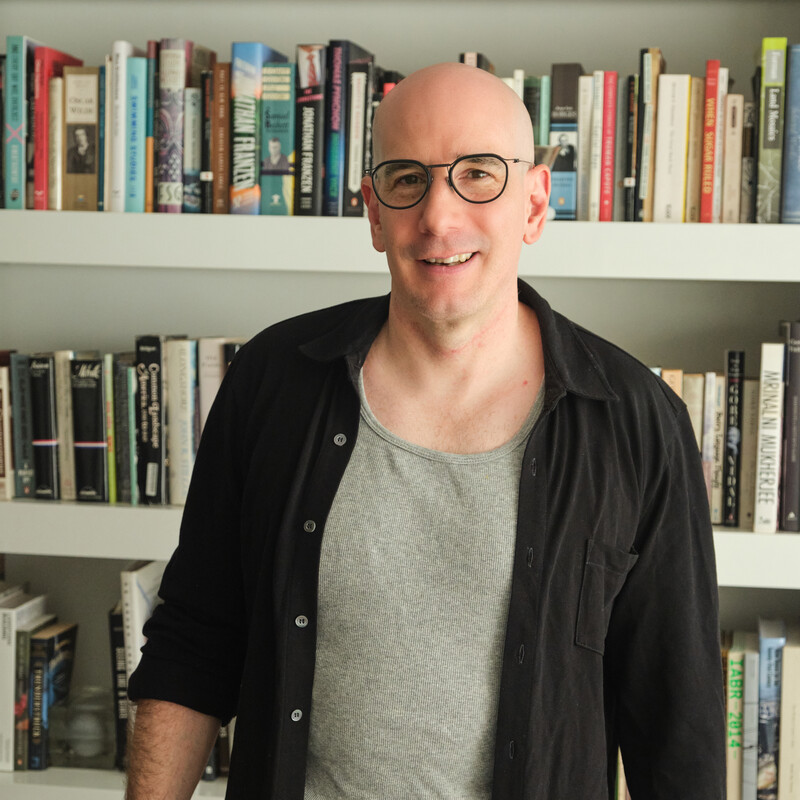
Felipe Correa
felipec@somatic-collaborative.com
Felipe Correa is a founder and managing Partner of Somatic Collaborative. Through Somatic Collaborative, Correa has directed a wide range of applied research and design projects in the Americas, Asia and Europe. Correa’s work focuses on the design and transformation of cities and urban areas. From the conceptualization of urban regeneration projects to the planning of new city extensions, Correa’s work sits at the intersection of design, policy, and economic development.
Correa serves as a Senior Advisor for Urban Strategy at the Aspen Institute. He is currently collaborating with the Aspen Institute Science & Society Program to develop new research and public engagement initiatives exploring how urban design, scientific evidence, and civic decision-making intersect.
He is the author of multiple books including “Beyond the City: Resource Extraction Urbanism in South America (University of Texas Press, 2016), “Mexico City: Between Geometry and Geography “(Applied Research and Design Publishing, 2015) and “A Line in the Andes” (Applied Research and Design Publishing 2014) which won first prize at the Pan American Architecture Biennale. His most recent book, “Sao Paulo: A Graphic Biography” a bilingual edition that traces the history of the city’s urban form was released in 2018 by the University of Texas Press. His forthcoming book focuses on the Amazon River Basin and the evolution of urban form.
In addition, he has lectured and exhibited at many universities and conferences, including Cornell University, Columbia University, Tulane University, University of Pennsylvania, Pontificia Universidad Catolica del Ecuador, The National Arts Club, and the Pan-American Architecture Biennale, among others. His work, research, and writings have been published in journals, including Architectural Design, Architectural Record, Harvard Design Magazine Topos and Volume.
He was the Vincent and Eleanor Shea Professor at the University of Virginia (UVA), where he served as chair of the Department of Architecture from 2018-2022. Prior to joining UVA, Correa was Associate Professor and Director of the Urban Design Degree Program at the Harvard University Graduate School of Design (GSD).
Correa received his Bachelor of Architecture degree from Tulane University, and his Master of Architecture in Urban Design from Harvard University.
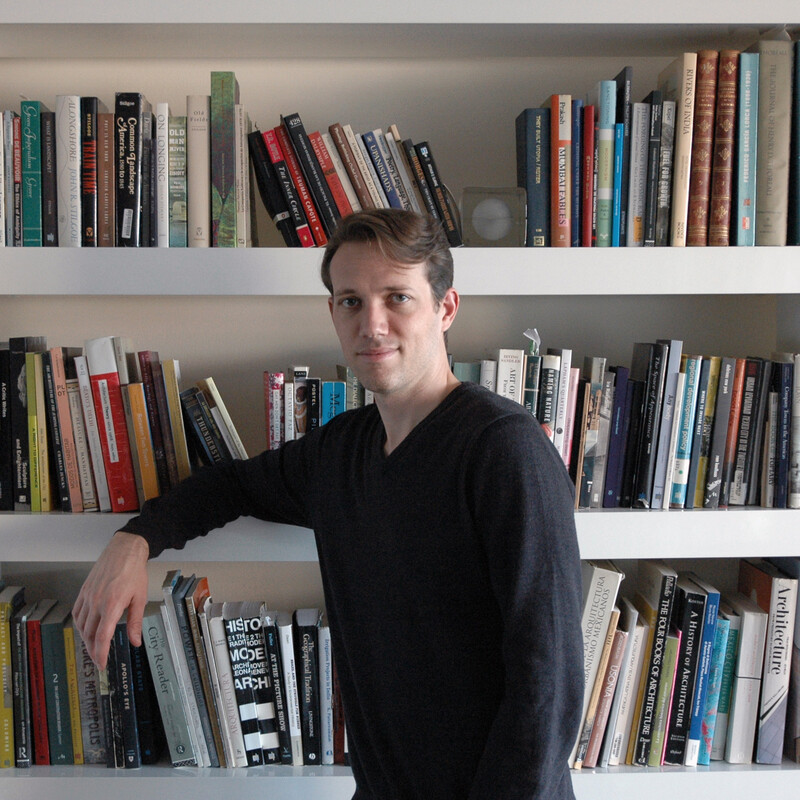
Anthony Acciavatti
anthonya@somatic-collaborative.com
Anthony Acciavatti is a founding partner of Somatic Collaborative. Trained as an architect, historian, and geographer, Acciavatti has worked in North America, Asia, and Europe.
His book, Ganges Water Machine: Designing New India’s Ancient River (awarded the 2016 John Brinckerhoff Jackson Book Prize), is a dynamic atlas of the Ganges River basin—the first such comprehensive atlas in half a century—based on a decade of fieldwork and archival research begun as a Fulbright Fellow in 2005. His account of irrigation, geography, population, and climate is the basis of a traveling exhibition that has appeared in museums and biennials in India, Italy, Holland, Ecuador, and South Korea.
Acciavatti’s work has been supported by grants and fellowships from the National Science Foundation, the Graham Foundation for Advanced Studies in the Fine Arts, Princeton University, Yale University, and his work on the Ganges by a J. William Fulbright Fellowship as well as grants and fellowships from the Ford Foundation and Harvard University.
Acciavatti is a founding editor of Manifest: A Journal of American Architecture and Urbanism. His work has been published in The New York Times, Cabinet, Architectural Design, Topos, The Indian Express, and Bracket among others.
He is the Diana Balmori Associate Professor of Architecture at the Yale School of Architecture. Prior to joining Yale he taught at Columbia and Princeton universities as well as the Rhode Island School of Design.

André Capocchi
andrec@somatic-collaborative.com
André Capocchi is an associate at Somatic Collaborative, where he collaborates on a variety of applied research and design projects. Some of these include “Cities of the Canopy: the Urban Form of Amazonia” and the urban vision plan for the city of Hangzhou (China); both with Felipe Correa. He also collaborated on “Groundwater Earth: The World Before and After the Tubewell” exhibition at Yale University with Anthony Acciavatti.
Born and raised in São Paulo, Capocchi studied architecture and urbanism at the University of São Paulo and continued his design education with a master’s degree from the Centro Universitario de Artes y Diseño de Barcelona.